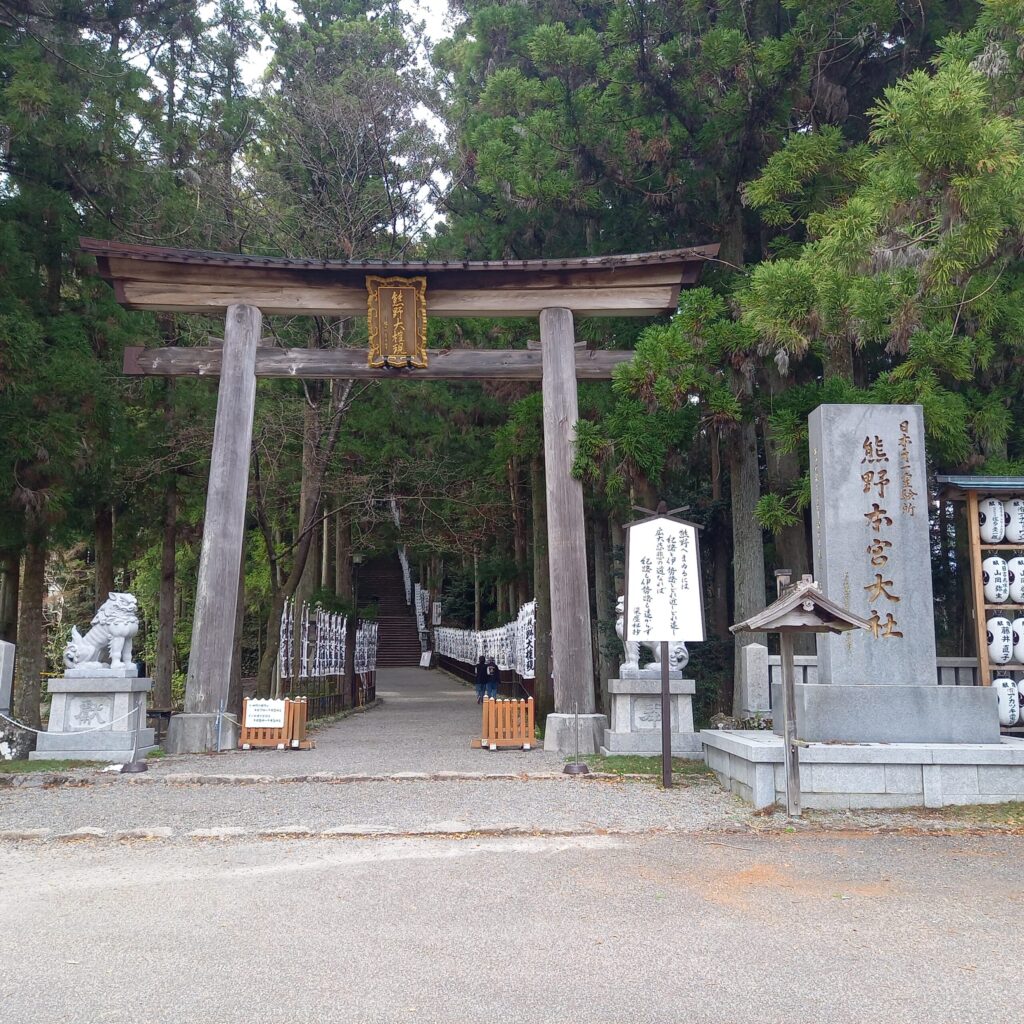
If you’re planning to visit Kumano Hongu Taisha, one of Japan’s most sacred shrines and a UNESCO World Heritage Site, this guide is for you.
In this post, I’ll share my real experience driving from Nanki-Katsuura, where to find food (this is important!), and two unmissable spots nearby—the giant Oyunohara Torii Gate and the beautifully curated World Heritage Kumano Hongu-kan museum.
1. Getting to Kumano Hongu Taisha from Nanki-Katsuura by Car
After descending the famous Daimonzaka stone steps near Nachi Taisha, I drove directly to Kumano Hongu Taisha without stopping for lunch. According to NAVITIME, the distance is 50.9 km, taking approximately one hour by car.
The route passes through Shingu City, which is your best chance to stock up on food before reaching the shrine area—more on that below.
Parking at Kumano Hongu Taisha:
- Free parking lot near the main shrine (approx. 58 spaces, including 2 for large buses)
- If full, an additional free lot is available next to the World Heritage Kumano Hongu-kan, just across National Route 168
Travel Tip: For international visitors driving in Japan, having a reliable eSIM ensures you always have GPS navigation available—especially useful in the mountainous Kii Peninsula where phone signals can be weak.
⭐ Exclusive Deal: 10% OFF eSIMs! ⭐
Get 10% OFF Sim Local eSIMs Here
(Discount applied automatically at checkout)
🚗 Exploring by Rental Car
The Kumano area is best explored by car — public transport is limited and the mountain roads are part of the experience. Compare rental cars available in Wakayama.
Find Rental Cars in Wakayama2. Lunch Near Kumano Hongu Taisha: What You Need to Know
Here’s something most travel guides don’t warn you about: there are very few places to eat near Kumano Hongu Taisha. The shrine sits in a remote mountain area, far from major towns.
My recommendation: When you pass through Shingu City on your drive, stop at a supermarket or convenience store and pick up lunch. You’ll thank yourself later.
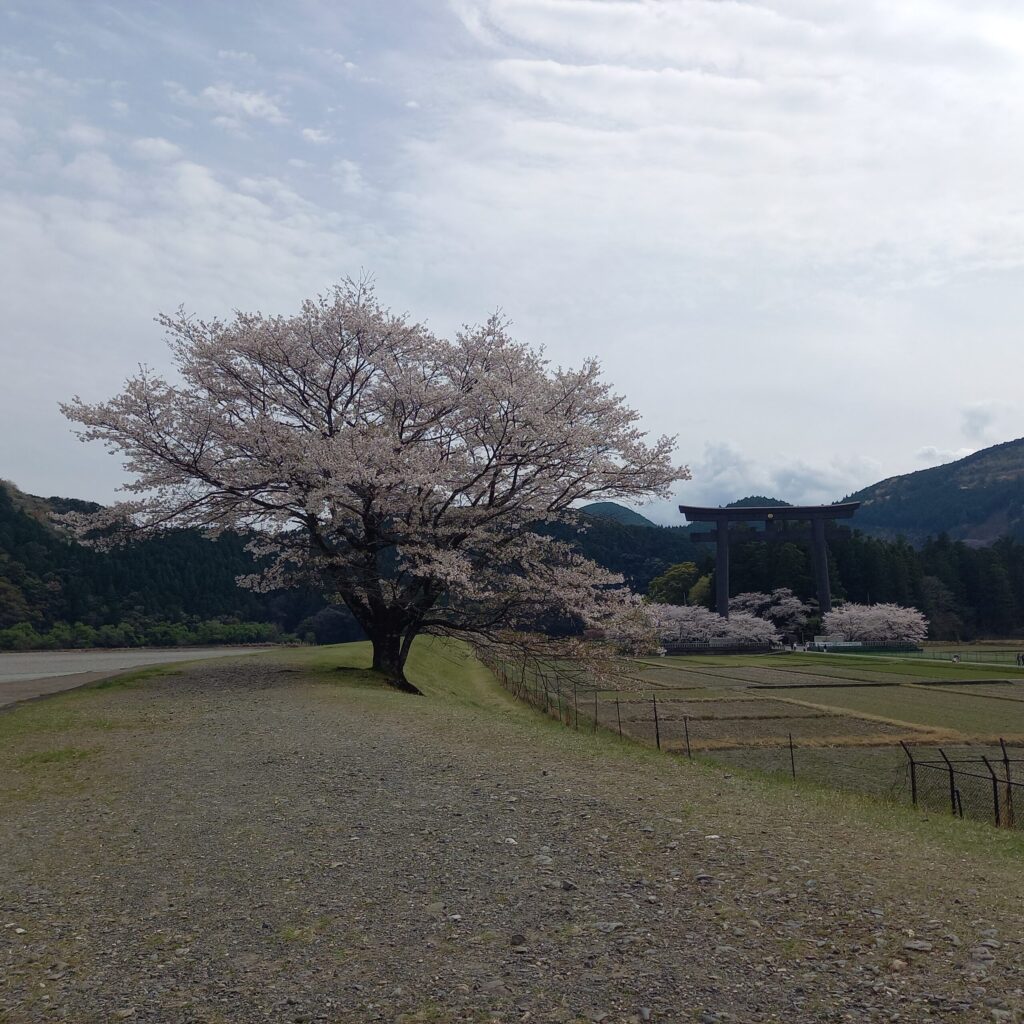
During my visit, I found a small bakery located along National Route 168 near Kumano Hongu Taisha and grabbed some bread. I then crossed National Route 168 and found a spot along the embankment to sit and eat—with the giant torii and cherry trees as my backdrop. Honestly, one of the most memorable picnic lunches I’ve ever had.
Food Options Near the Shrine:
| Option | Details |
|---|---|
| Supermarket/convenience store in Shingu | Most reliable — plenty of variety |
| Small bakery near Kumano Hongu Taisha | Limited selection, but charming |
| Yunomine Onsen area restaurants | A short detour; traditional Japanese food |
3. Oyunohara: The Sacred Site with Japan’s Largest Torii Gate
After visiting the main shrine, I crossed Route 168 and walked to the embankment—and that’s when I saw it.
A massive torii gate rising above the treetops, flanked by cherry trees in full bloom.
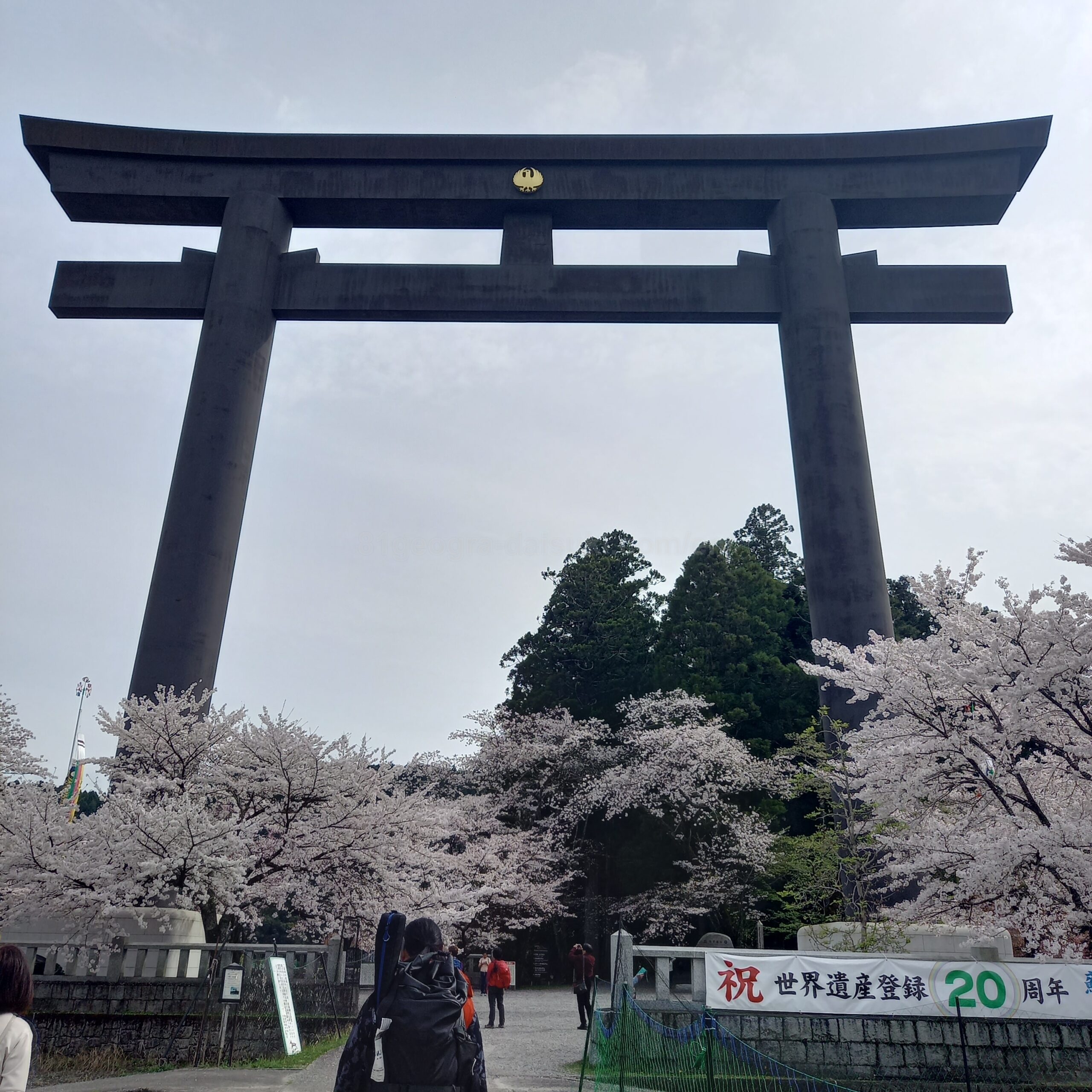
This is Oyunohara (大斎原), the original location of Kumano Hongu Taisha. In Japan, a torii gate marks the entrance to sacred Shinto ground—and this one is extraordinary. The shrine once stood on a river delta here, but a devastating flood in 1889 destroyed most of the structures. The surviving buildings were relocated to their current position on higher ground.
In 2000, this giant torii gate was erected to mark the entrance to the former sacred site. At 34 meters tall and 42 meters wide, it is the largest torii gate in Japan.
Why it’s worth visiting:
- The scale of the torii is breathtaking up close
- In spring, cherry blossoms frame the gate beautifully
- The peaceful sacred grounds behind the gate are open to walk through
- It’s only about a 10 to 15-minute walk from Kumano Hongu Taisha.

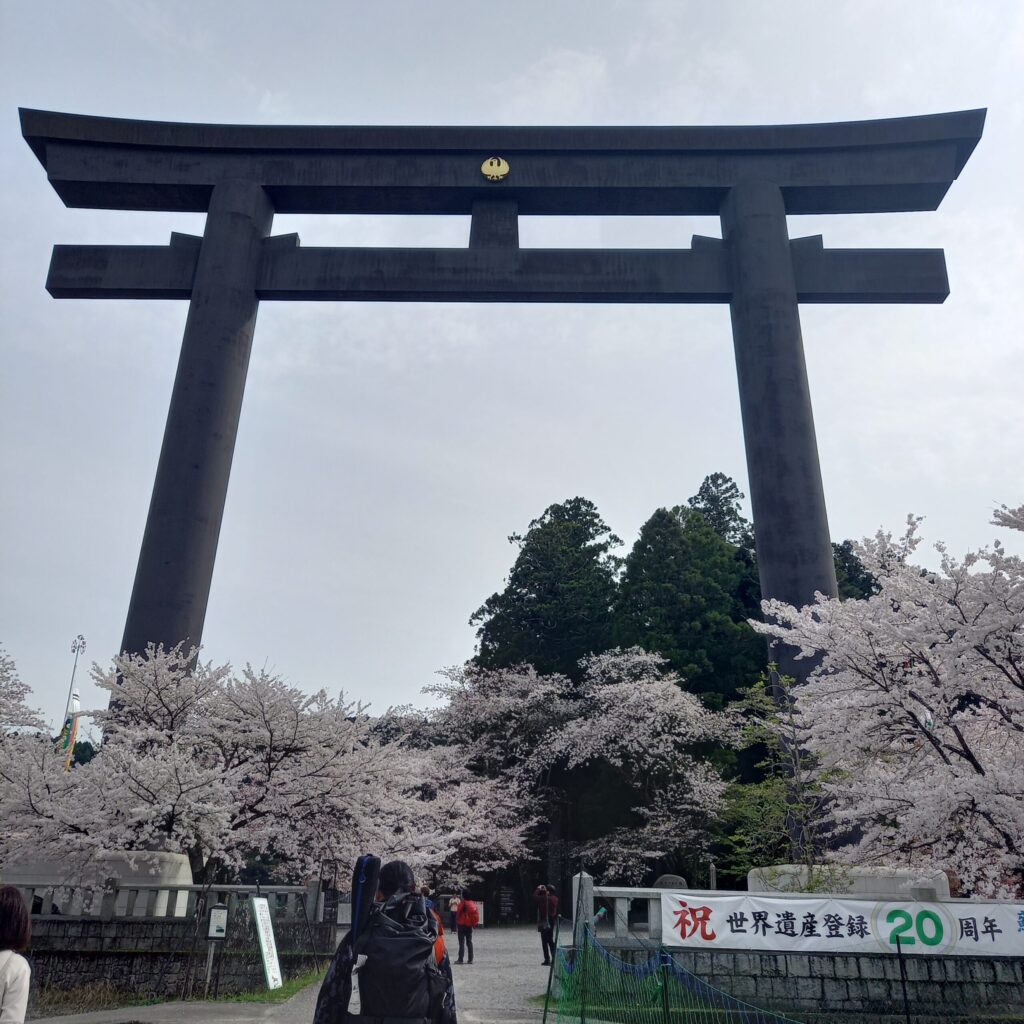
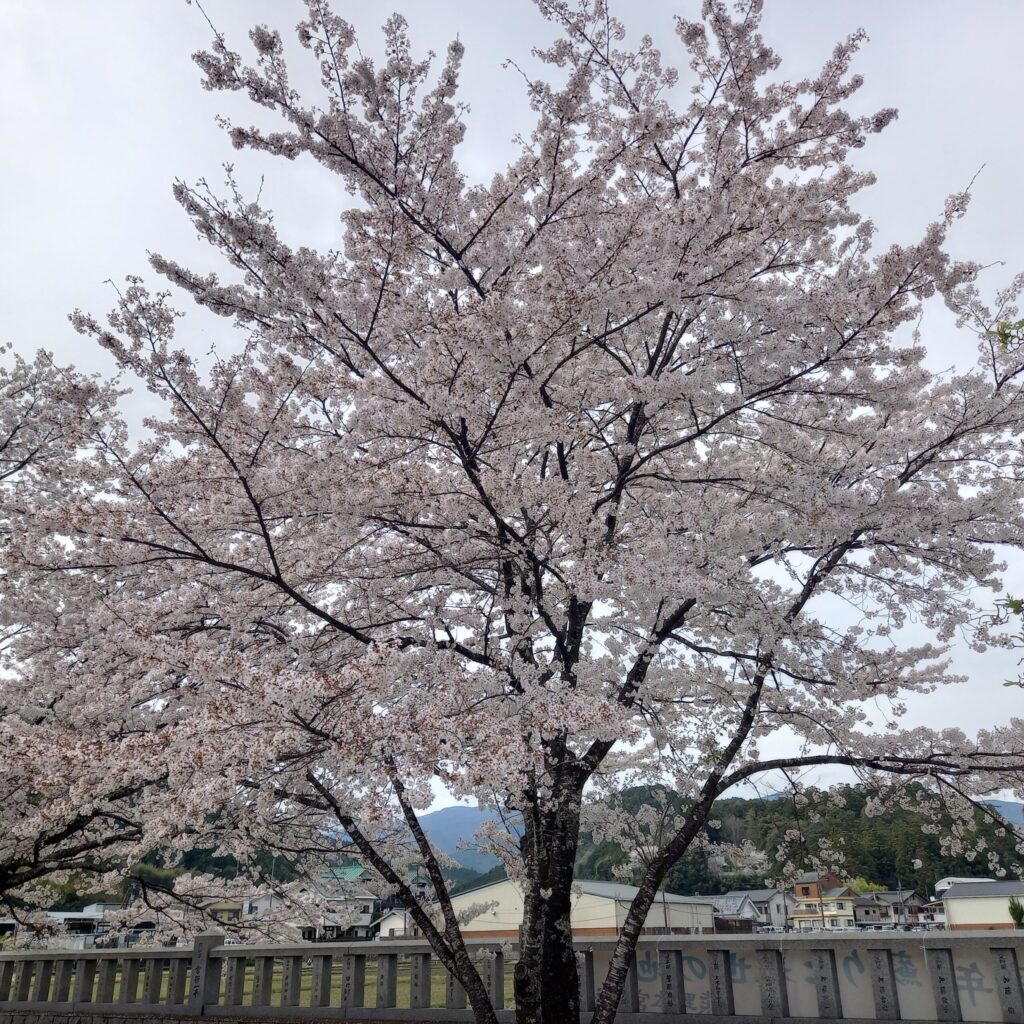
The cherry blossoms were absolutely stunning. A view I won’t forget.
4. World Heritage Kumano Hongu-kan: A Museum Worth Your Time
Just across National Route 168 from Oyunohara stands the World Heritage Kumano Hongu-kan—a museum and cultural center dedicated to the history of the Kumano Kodo pilgrimage routes and the Kumano Sanzan shrines.
I had it on my list from the start, and I’m glad I didn’t skip it. The building itself is quietly beautiful—a single-story wooden structure built with locally sourced timber, designed to sit comfortably in the natural surroundings.
About the Museum:
- Opened: April 1, 2005
- Architecture: Single-story wooden building using locally sourced timber
- Facilities: 248-seat multipurpose hall, exhibition space, library corner, tourist information (Kumano Hongu Tourism Association), and the Wakayama Prefecture World Heritage Center
- Admission: Free
- Parking: Free (58 spaces, shared with the shrine)
The exhibition covers the spiritual and cultural significance of the Kumano Kodo—one of only two pilgrimage routes in the world to be designated a UNESCO World Heritage Site (the other being the Camino de Santiago in Spain). During my visit, many international visitors were exploring the exhibits, which speaks to how widely this site is now known.
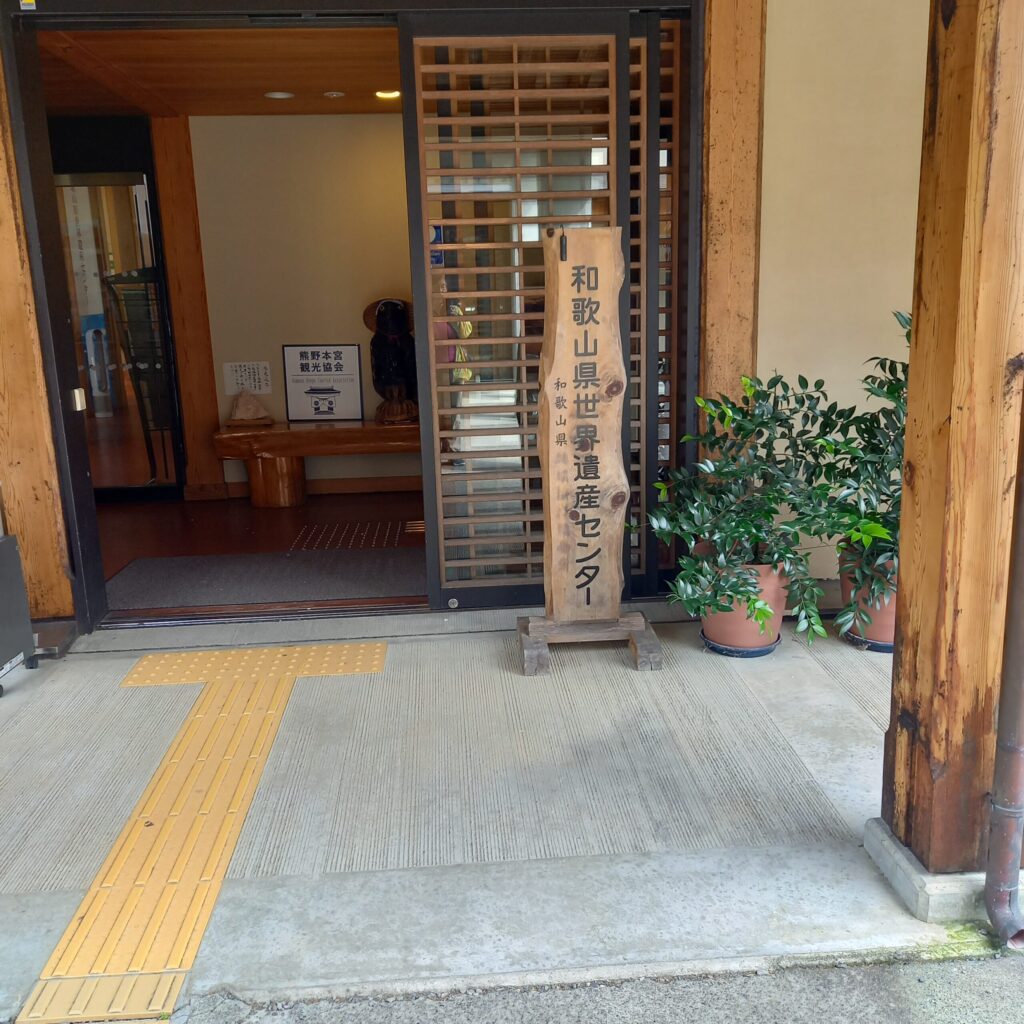
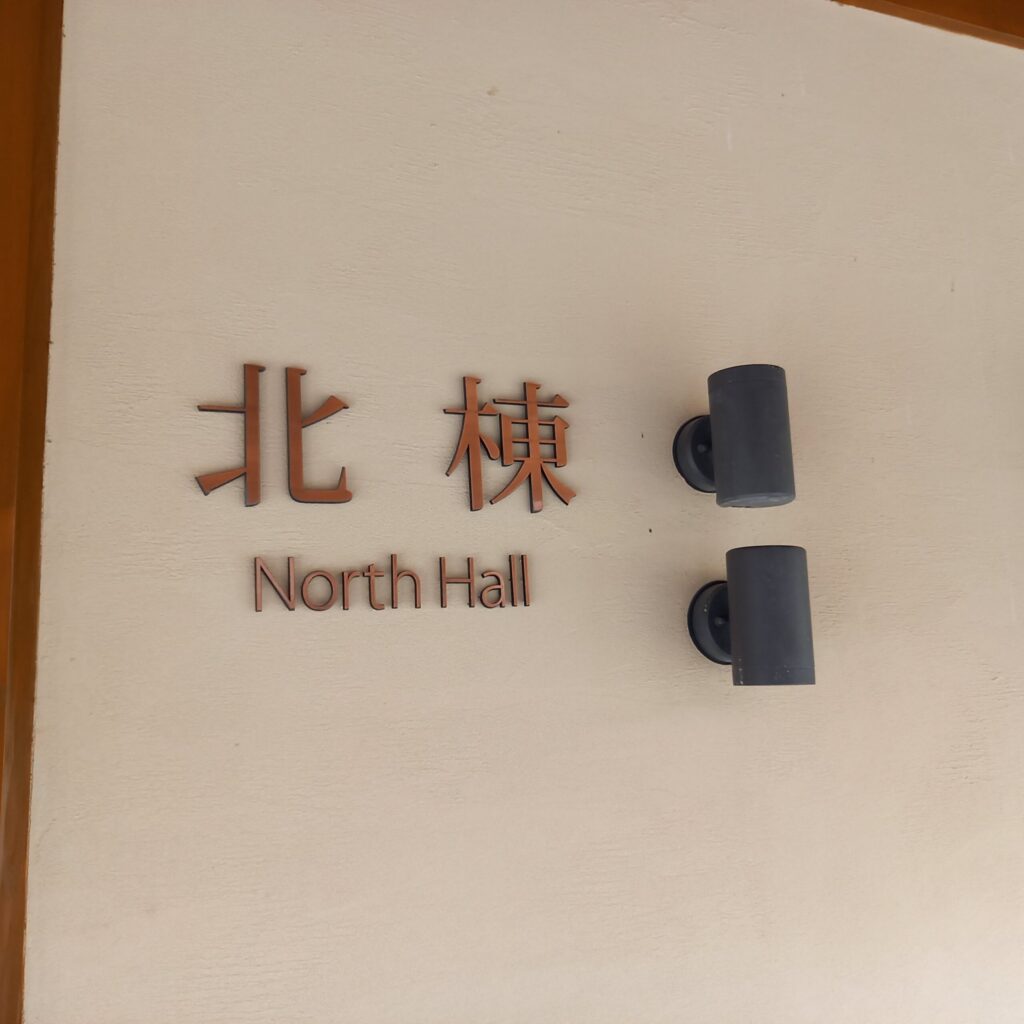
Official website: https://www.city.tanabe.lg.jp/hongukan/en/index.html
🚗 Exploring by Rental Car
The Kumano area is best explored by car — public transport is limited and the mountain roads are part of the experience. Compare rental cars available in Wakayama.
Find Rental Cars in Wakayama5. Travel Tips Summary
Here’s everything you need to know in a nutshell:
Getting There:
- From Nanki-Katsuura / Daimonzaka: ~50.9 km by car, approx. 1 hour
- Route passes through Shingu City — use this for lunch pickup
- Free parking available at the shrine and at Kumano Hongu-kan
What to See:
- Kumano Hongu Taisha main shrine (the spiritual heart of the Kumano pilgrimage)
- Oyunohara with Japan’s largest torii gate
- Cherry blossoms in spring (timing varies — peak bloom can range from late March to early May; late March to April in 2026)good
- World Heritage Kumano Hongu-kan museum (free admission)
Practical Tips:
- Bring your own food — dining options are very limited in this area
- Allow at least 2–3 hours — visit Kumano Hongu Taisha, walk to Oyunohara, and explore the museum
- Free parking is available, but can fill up on weekends and public holidays
Staying Connected in Japan: An eSIM is the easiest way to stay connected without swapping physical SIM cards. You can set it up before leaving home, and it activates the moment you land in Japan.
📖 Guidebook recommendation — available on Amazon Japan (English book)
📖 Guidebook recommendation (Japanese-language book on Amazon Japan):
🗺️ This Series
👉 Stayed at Kyukamura NANKI-KATSUURA and Visited Kumano Sanzan (1) – Hayatama Taisha
👉 Stayed at Kyukamura NANKI-KATSUURA and Visited Kumano Sanzan (2) – Daimon-zaka
📍 Stayed at Kyukamura NANKI-KATSUURA and Visited Kumano Sanzan (3) – Kumano Hongu Taisha(This article)
🏨 Book your stay at Kyukamura NANKI-KATSUURA
Planning a visit to Kumano Sanzan? Kyukamura NANKI-KATSUURA is a perfect base.
👉 Search hotels in Nachikatsuura on Trip.com
This article is based on personal experience and photos, with some AI assistance to improve readability.