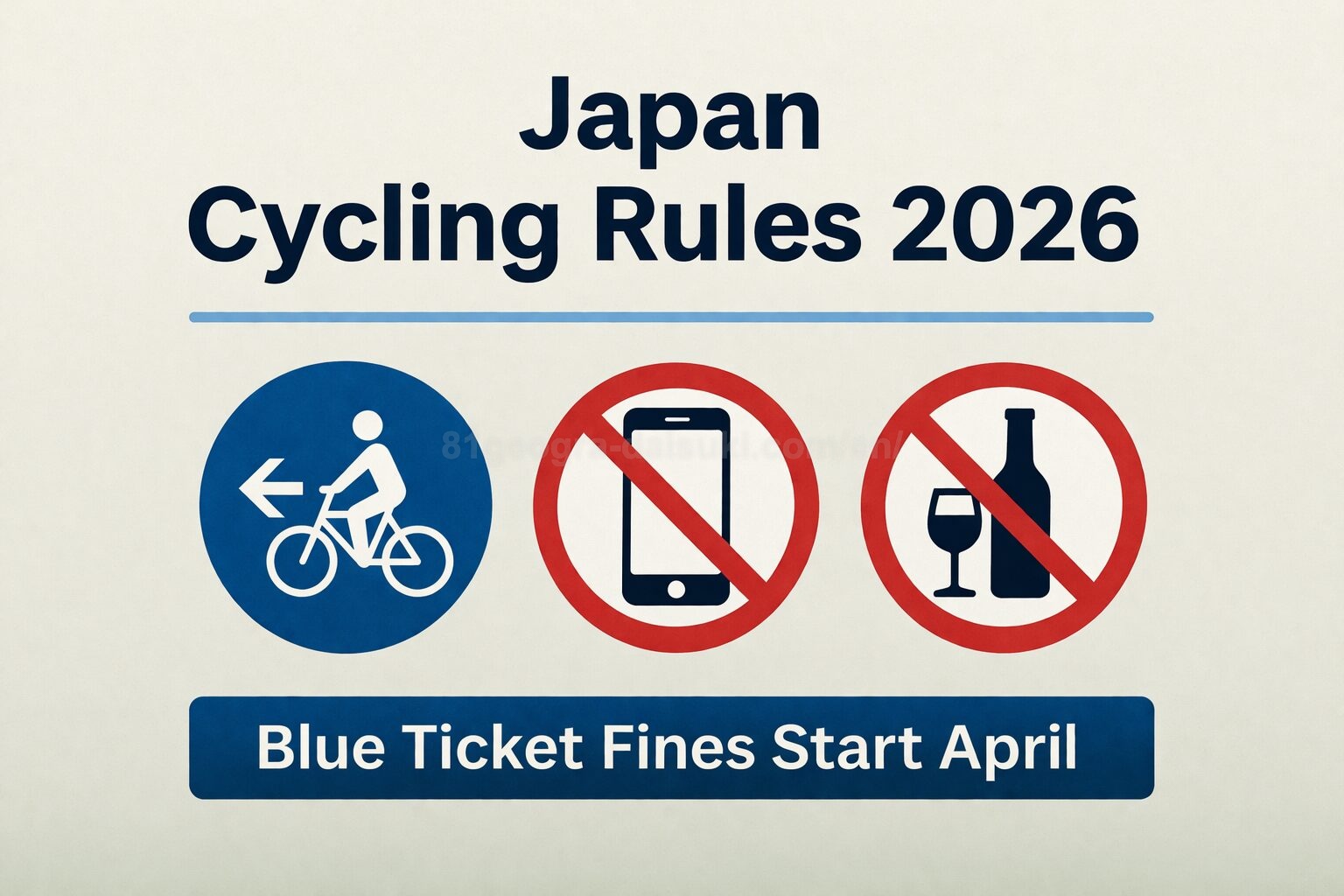
Cycling is one of the best ways to explore Japan, from quiet countryside roads to vibrant city streets.
However, starting in April 2026, traffic rules for cyclists will be enforced more strictly, and fines may apply for certain violations.
If you’re planning to cycle in Japan, it’s important to understand these rules in advance to avoid unexpected trouble.
“I didn’t know” will no longer be an excuse.
This guide explains both the new system and the essential rules you need to stay safe and avoid fines.
The New “Blue Ticket” System (Starting April 2026)
Starting in April 2026, Japan will introduce a new system for handling bicycle traffic violations, which applies to cyclists aged 16 and over.
What is a “Blue Ticket”?
Until now:
Minor violations: Warning (yellow card)
Serious offenses: Criminal charges (red ticket)
From April 2026:
- Blue Ticket (青色切符) will be introduced
- Police may issue fines for certain violations
This creates a middle level between warnings and criminal penalties.
Fine Amounts
The amount of the fine depends on the type of violation. Here are some common examples:
| Violation | Fine |
|---|---|
| Smartphone use while riding | ¥12,000 |
| Running a red light | ¥6,000 |
| Riding against traffic / on the sidewalk | ¥6,000 |
| Riding without lights at night | ¥5,000 |
| Riding with an umbrella / using earphones | ¥5,000 |
| Illegal double riding | ¥3,000 |
In total, the system covers 113 types of violations.
For official details, see the National Police Agency (Japan):
https://www.npa.go.jp/bureau/traffic/bicycle/portal/system.html
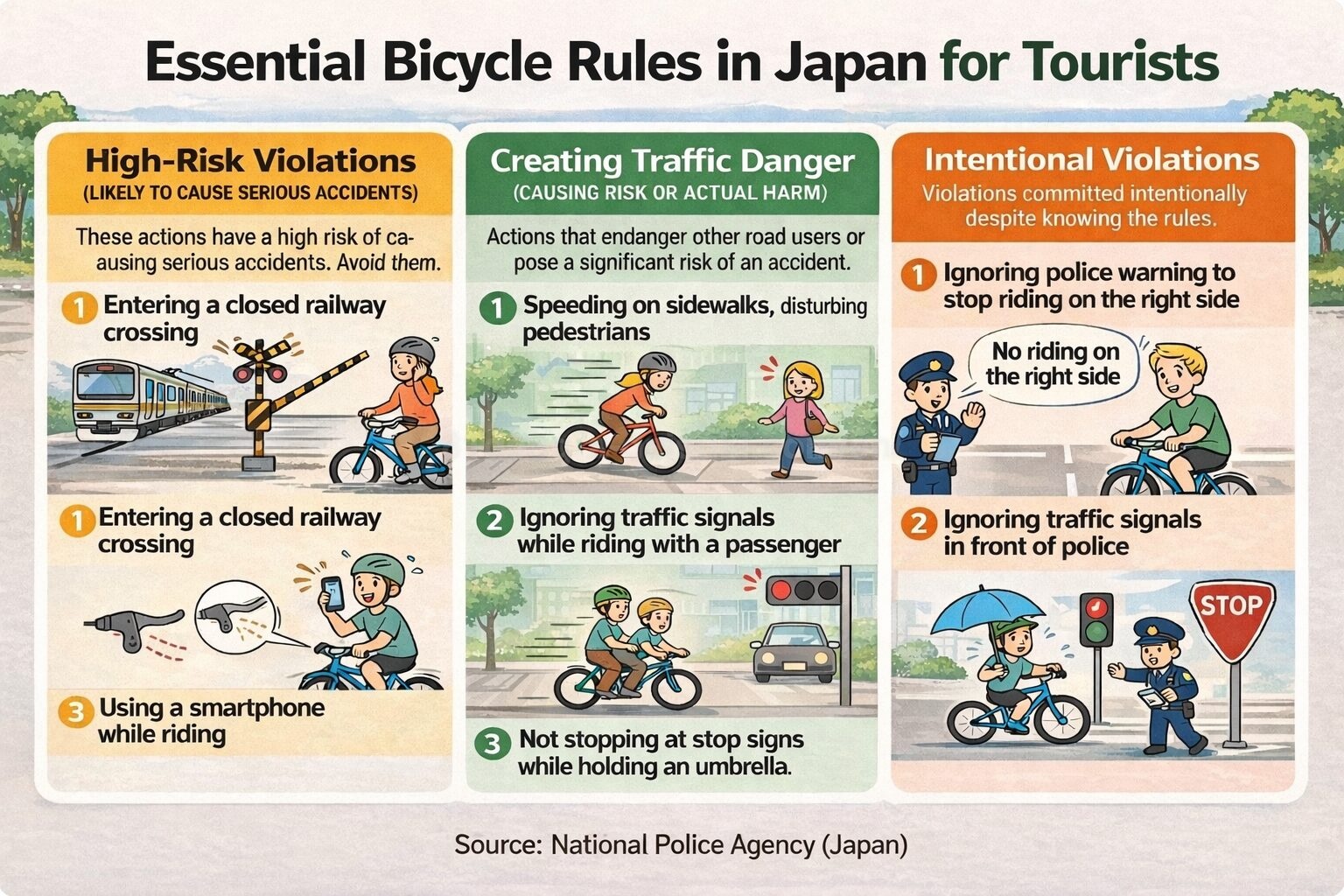
For an official visual summary of bicycle rules and violations, refer to the National Police.
👇️ The official materials are provided in multiple languages, including English, Japanese, and Simplified Chinese, making them accessible to a wide range of international visitors.
Agency (Japan):
https://www.npa.go.jp/bureau/traffic/bicycle/portal/poster.html
Key Impacts for Tourists
- Fines May Apply
Cyclists may be required to pay a designated fine for certain violations. If you receive a blue ticket, you have 8 days to pay the fine at a bank or post office. If you miss this deadline, the case may be referred to criminal proceedings. - Stricter Enforcement
Police are expected to monitor common risky behaviors more actively. - No Tourist Exception
These rules apply equally to tourists. Even short-term visitors are expected to follow Japanese traffic laws.
Essential Rules You Must Know
These rules have always existed, but with stricter enforcement, they are now more important than ever.
Ride on the Left (The Golden Rule)
In Japan, bicycles must ride on the left side of the road, just like cars.
Riding against traffic is dangerous and may result in penalties.
Follow Traffic Lights
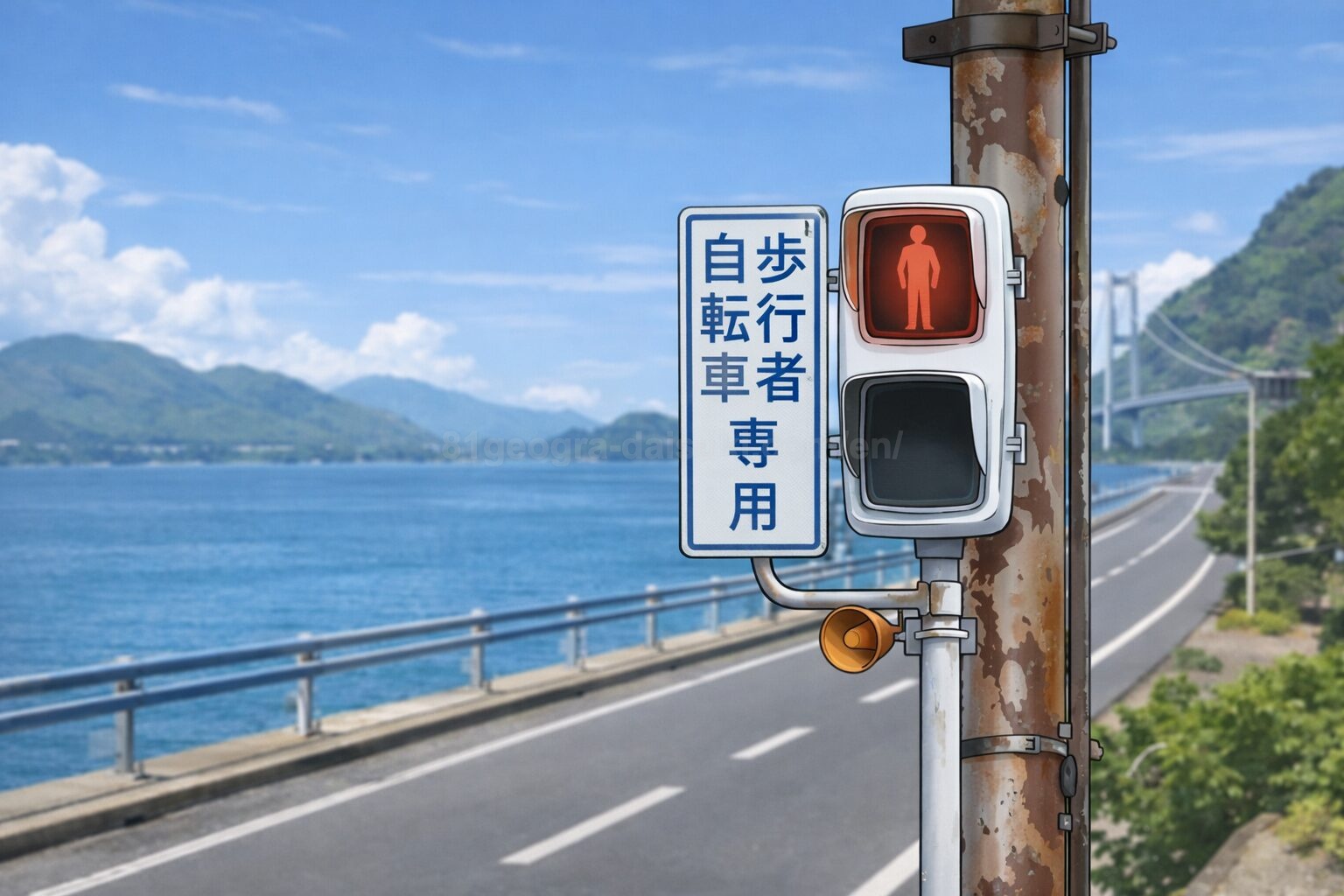
As a general rule, cyclists must follow vehicle traffic signals.
However, when a signal is specifically designated for pedestrians and bicycles, cyclists must follow that signal instead.
Two bicycle traffic signals by a seaside road: a horizontal signal with a red light and a vertical signal with a red light, both labeled “Bicycles Only” in Japanese.
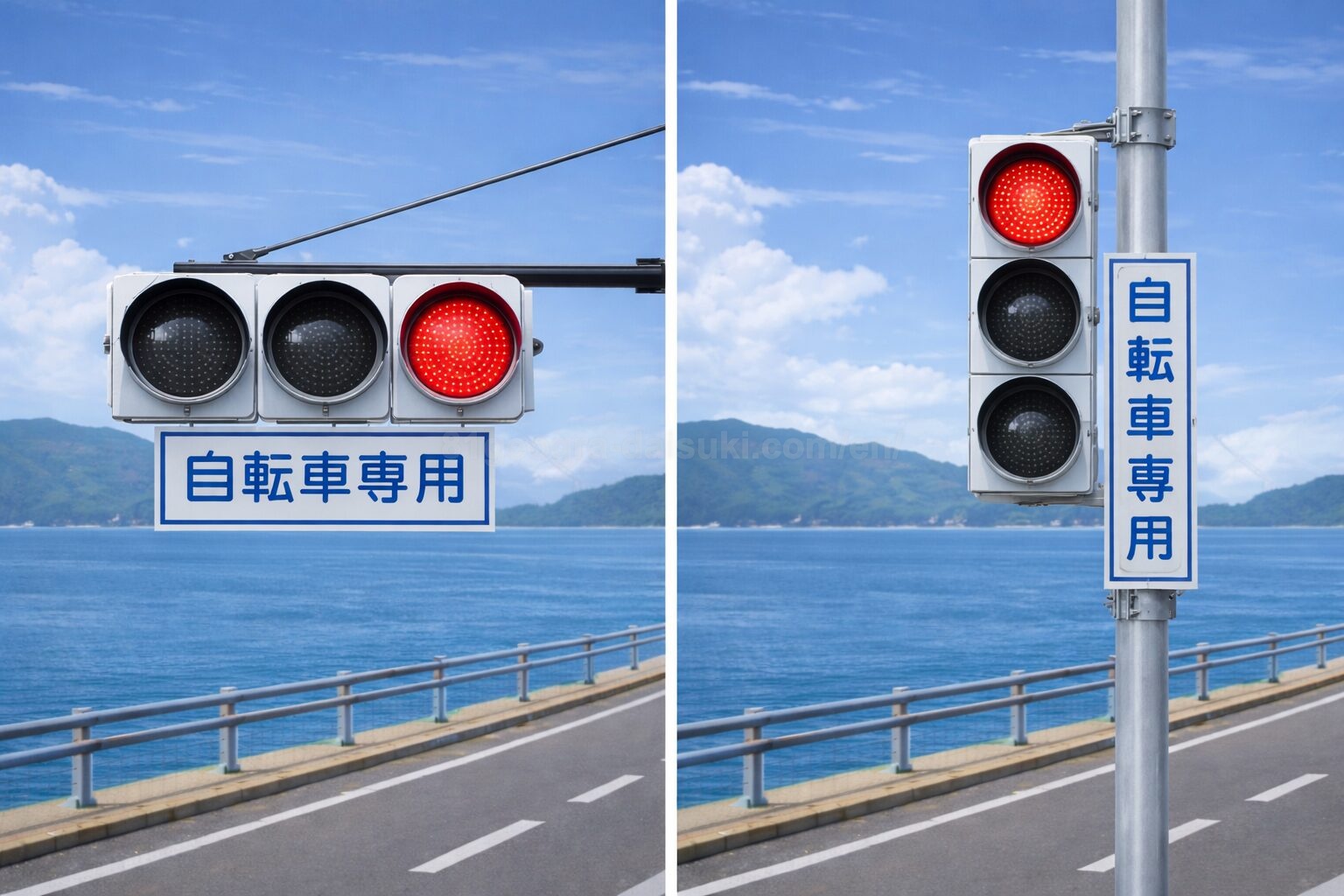
A pedestrian and bicycle traffic signal showing a red standing person, next to a sign in Japanese indicating “Pedestrians and Bicycles Only,” beside a coastal road with a bridge in the background.
Stop Completely at “Stop” Signs
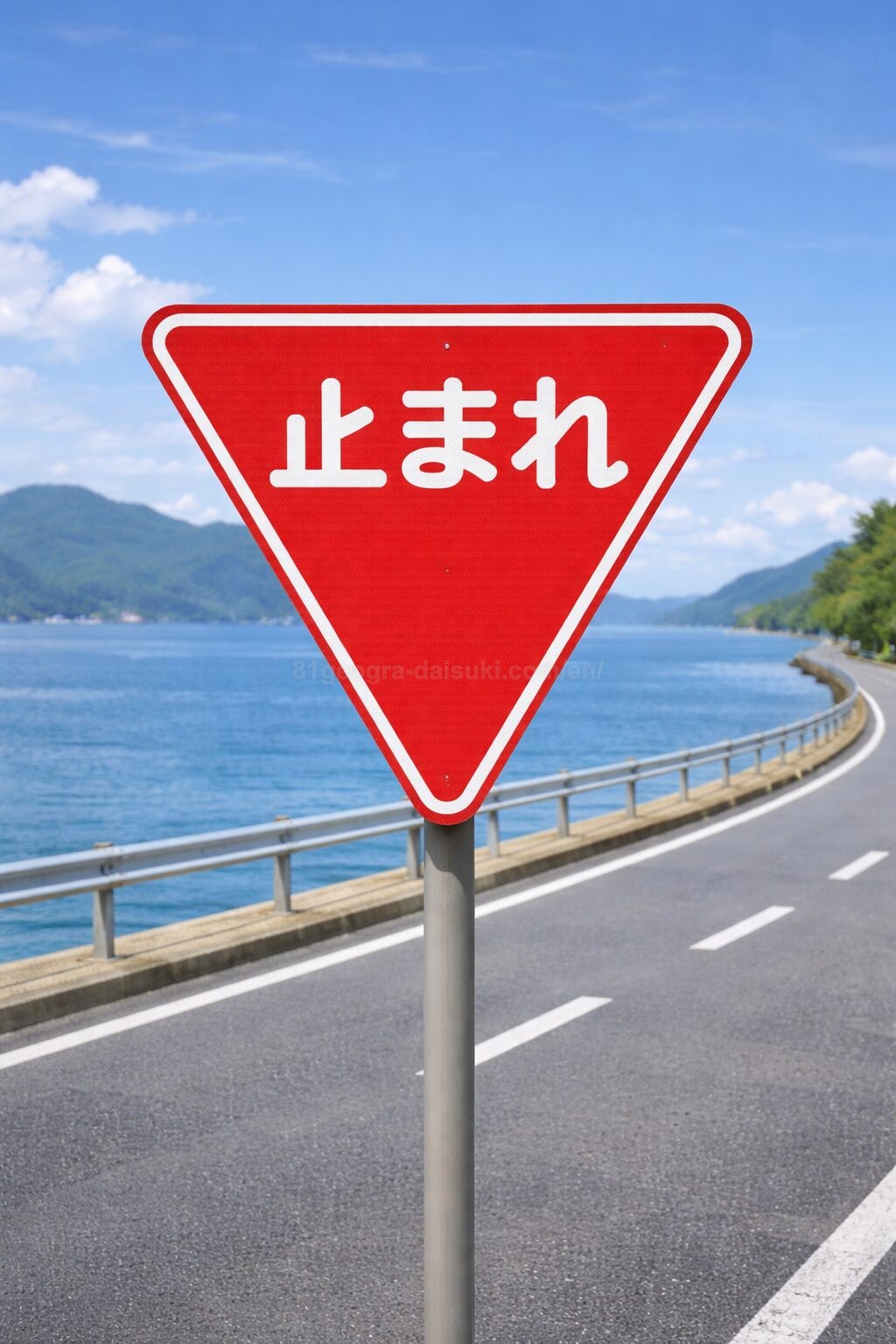
Japanese stop signs (止まれ – Tomare) require a complete stop.
Simply slowing down — known as a rolling stop — is not enough and is considered a violation.
Do Not Cycle Under the Influence
Japan has very strict rules regarding drinking and cycling.
Cycling after drinking can result in serious penalties.
If you plan to drink, do not ride.
Use Lights at Night
Riding at night without lights is illegal.
Make sure your bicycle has:
- A front light
- A rear reflector or light
This link will take you to the Japanese website.↓
Road vs. Sidewalk: Where to Ride
This is one of the most confusing points for visitors in Japan.
Basic Rule:
Ride on the road, keeping to the left side.
Sidewalk riding is allowed only if:
- There is a shared pedestrian and bicycle sign
- Children under 13 or adults aged 70 and over are riding
- Road conditions are unsafe
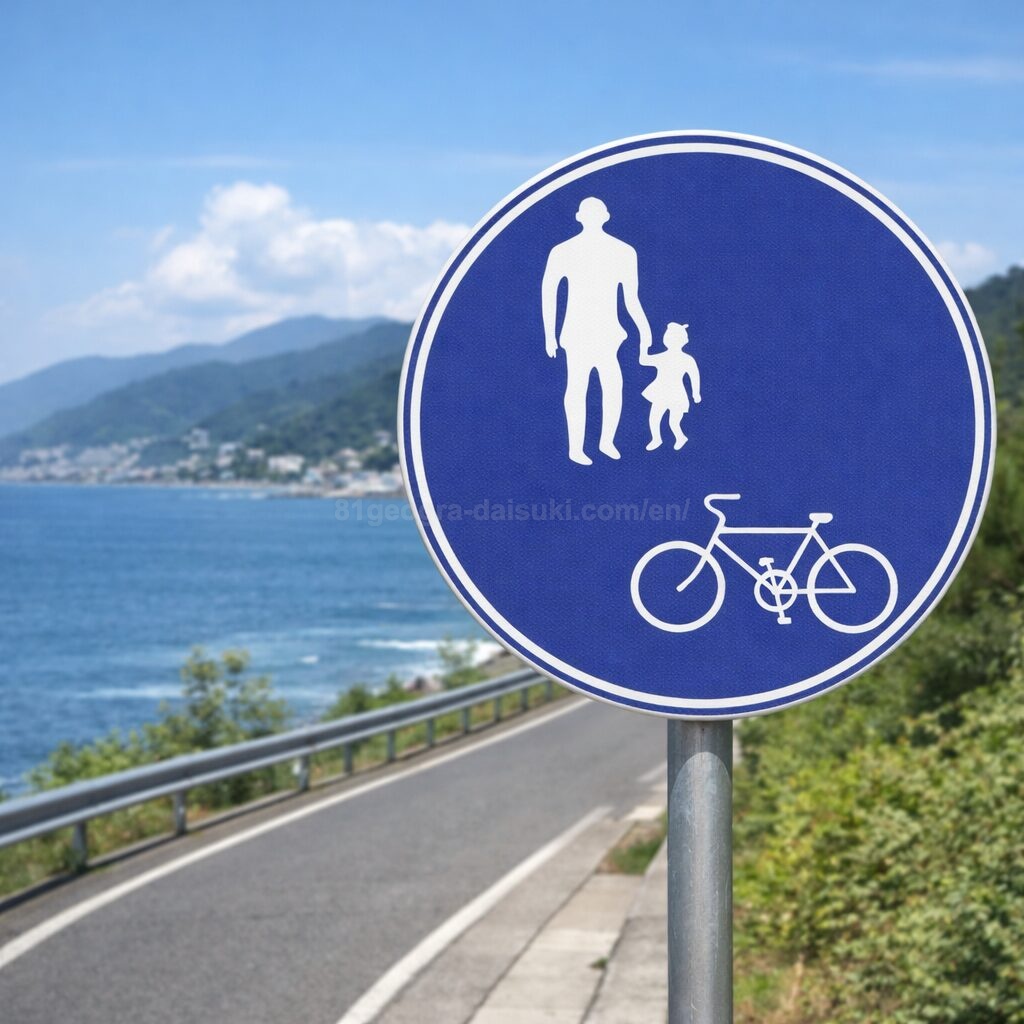
One important exception is when you see a blue sign showing pedestrians and a bicycle together.
This sign indicates a shared pedestrian and bicycle path.
When this sign is present, bicycles may use the sidewalk. However, pedestrians always have priority.
Ride slowly and be prepared to stop at any time.
Important:
Pedestrians always have priority on sidewalks.
Do Not Use a Smartphone While Riding
Using a smartphone while cycling (such as texting or checking maps) is prohibited.
If you need to use your phone:
→ Stop in a safe place first
For safety, avoid using headphones or anything that reduces awareness.
This link will take you to the Japanese website.↓
Wear a Helmet (Strongly Recommended)
Wearing a helmet is not mandatory, but strongly recommended.
There is currently no penalty, but it significantly improves safety.
This link will take you to the Japanese website.↓
💡 Additional Tips for a Safe Ride
- No Double Riding
Carrying another person is generally not allowed (except small children in proper seats) - No Umbrella While Riding
Use a raincoat instead - Respect Pedestrians
Always yield and ride carefully in shared spaces
Driving while holding an umbrella is not permitted. Please wear a raincoat.
This link will take you to the Japanese website.
🧭 Planning to Cycle in Japan?
If you’re planning a cycling trip, you may also find these guides helpful:
ーShimanami Kaido 2-Day Cycling Itinerary (Starting from Imabari)
ーBest Cyclist-Friendly Hotels on the Shimanami Kaido (Imabari & Onomichi)
Final Thoughts
Cycling in Japan is generally safe, enjoyable, and one of the best ways to experience the country.
Have a nice trip!(^^)/
Check out ROCKBROS cycling gear — trusted by riders worldwide for quality helmets, bags, pedals & more.If you are traveling in Hokkaido, renting a car at the airport is convenient.

This article is based on personal experience and photos, with some AI assistance to improve readability.